Thursday

Thailand for Beginers Travel


People say Thailand simply offers it all to travellers in a neat, great-value package -- whether you're an independent budget backpacker wanting to explore off the beaten track, or a well-heeled tourist looking for an exclusive slice of paradise.

Rough it while trekking through mist-shrouded mountains; be astounded by teeming aquatic life as you plunge into turquoise waters for a dip; or savour a romantic pool villa for a perfect luxury honeymoon -- you can do it all in the Land of Smiles.

Thailand has been on the international backpacker beat for decades now, and while backpackers are making the most of ever-increasing budget flights to Thailand, these days luxury travellers bolster the numbers too.

From the food and spas, to the temples and culture, Thailand is a land steeped in fascinating Buddhist history, catapulted into the present through fast-paced economic growth that kicked off in the 1960s.

It's true that more than 10 million tourists arrive here annually now, following the well-worn path of those before them. But there's a reason the crowds keep on coming.

The capital Bangkok offers glittering temples on the majestic Chao Phraya River, with shopping for both bargains and top-range designer items luring the masses as well.

Tuesday

Holiday in Maroco


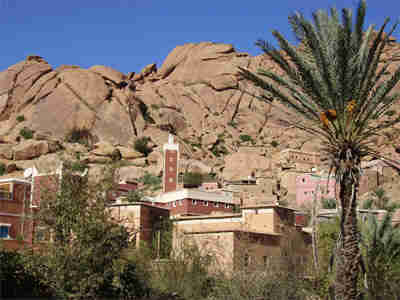
Travellers to Morocco find it hard to resist the lure of the distant Atlas Mountains, which arc southwards from the Mediterranean coast for 1,000 miles (1,609km), providing a trekker's paradise. Numerous guided walking tours and treks are on offer, generally starting from Marrakech or the village of Imlil, destined for the spectacular High Atlas to hike beneath forbidding peaks, through deep canyons, and past remote and ancient Berber villages. Do-it-yourself trekkers will find locals willing to act as porters and guides, and hikers can also hire mules to carry equipment. The adventure opportunities in the Atlas are varied, and range from challenging, like the ascent of Jebel Toubkal, the highest summit in North Africa, to a tranquil stroll through the wild landscape of Jebel Sahro region, where rocky plateaux are interspersed with oases where exotic creatures congregate in crystal clear pools.

Saturday

Dokmai Garden


Dokmai Garden is the perfect escape for the discerning tourist who wishes to escape the hustle and bustle of downtown Chiang Mai. It is just 25 minute drive from Central Chiang Mai, and yet it feels like you are a world away! The garden itself would be perfect for the avid gardener, or the curious new comer looking for some information on local flora. There are over 800 species of plants, 500 of which are signposted with information and names in Thai, English and Japanese.

The staff speak English, Thai and Swedish and are more then happy to give you a private tour of the garden at no additional cost. Eric, the husband of garden owner, Ketsanee Seehamongkol, is a wealth of knowledge, having obtained a PhD in Biology, and he seems more than happy to answer as many questions as you can throw at him!
The staff are very familiar with all plants in the grounds and if you are specifically interested in one thing, eg, flowering plants, they are more then happy to customise the tour to include this.
There is also many activities to keep the children entertained, canoeing or fishing in the large pond, or playing with Reuben, the resident Golden retriever!!
After strolling around the garden for a few hours, it was lovely to come and relax in the open air restaurant. The menu incorporates local specialities and some new dishes created by the Seehamongkol family! The ingredients are all taken from the garden where possible and drinks are make using special ingredients like Rosella, and teak wood! Very exotic!

Altogether a wonderful experience and a great opportunity to get in touch with nature for a day!

I will definitely be coming back next time I am in Chiang Mai!!

Friday

Family Travel Tips


There are those who say small children should be nowhere near a populated area, let alone an airport or an airplane, but parents deserve a break too and sometimes travelling with a small child is unavoidable. Given the wonders of Calpol in a domestic setting, it is tempting to pack a bottle for in-flight tantrums but that won't always work. Instead, here are some parent-tested suggestions for travelling with a little one:

Before the journey

Pick a family-friendly destination. Never underestimate the attraction of a beach for a young child, but make sure the little ones are aware of the dangers of water. Look for hotels that let children stay free of charge in their parents' rooms and provide free meals for children or buffet-style breakfasts included in the price of the room. Ask about babysitting services, creches, kids' clubs and facilities for children, too.
Don't forget that your child needs a passport. Since October 1998, separate passports are now required for all children under 16.
Be flexible and keep your itinerary simple. Book direct flights. Travel at night so children can sleep through journeys.
Try to get bulkhead seats on the airplane (the bulkhead is the partition that divides a plane into different sections, between business class and economy for example). Call the airline in advance or arrive extra early at check-in.

Thursday

Tips for Saving Time and Money in Disney Theme Parks


Disney theme parks are a great vacation destination for kids and families. However, most families with kids travel to Disneyland at the same time of year - the summer months. This is the peak vacation season for travelers and Disney theme parks are no exception.

Travelers are better off planning ahead when it comes to visiting Disneyland in Anaheim and Walt Disney World in Orlando.

Best Day of the Week

Crowds will be smaller during the off-season, but for many families, especially those with school-aged children, this is not possible. If you cannot avoid the off-season, try to go during the last week of June or the first week of September.

Once July 4th rolls around, Disney parks are in high gear. If you are planning a July or August trip to Disneyland, Tuesdays through Thursdays are best. While Disneyland does not release daily attendance records, weekends are noticeably busier than weekdays.

Best Time of Day

Any parent knows that getting out the door with kids in the morning can be a daunting task. Families on vacation like to sleep in and take their time getting out the amusement park. Use this to your advantage by getting up early and arriving at Disneyland or Walt Disney World early. It will pay off significantly.

You will get into the park quicker and line-ups for attractions will be short. Disney usually opens at 8 or 9 a.m. during the summer. Be sure to ask your hotel for a wakeup call and give yourself and your family plenty of time to get to the park.

Monday

Prepare for your Outdoor Activities


Use your common sense when participating in outdoor activities. Always be prepared for the unexpected. Do not take unnecessary chances. Do not be careless. Think before you act. Be prepared to administer basic first aid and CPR.

Basic First Aid Kit

**The following list is only a suggestion of some of the supplies you should consider for your first aid kit. You should personalize your kit to meet your needs, activities and situations. The key to a good first aid kit is its usability. What supplies to include and how much of each item should be based upon your individual needs.

Bali Marine Walk


Imagine…You are walking at the ocean bed, admiring the beauty of the sea garden, colorful corals, playing with bright fishes, feeding them from your hand… and smiling. Marine Walk is the ONLY ONE activity in LEMBONGAN ISLAND!!! ONLY 30 minutes cruise to the white sandy Lembongan Island with Marine Walk FAST BOAT and enjoy our “ALL INCLUSIVE ACTIVITIES".

Bali Marine Walk is revolutionary of diving system !! You don't have to know how to swim or dive. You can breath naturally and keep your make-up on. Because water does not reach your head or face, you can even dive with your contact lenses, glasses, or sunglasses on!.

With BALI MARINE WALK you can dive with smile !!

About Marine-Walk
Bali Marine Walk using an open-ended helmet that allows the wearer to stay underwater by just putting it over head. The helmet is connected to the scuba tanks by air hose that supplies it with air. The interior of the helmet is designed with a defogging mechanism that prevents the front window from fogging. The helmet is also fitted with a vent which continuously exhausts unneeded air from the helmet. Since the bent is located at the back, there is no air valve to obstruct the guest's view.

Sunday

Transport in Johannesburg

INIBUS taxis are by far the cheapest and most popular form of public transport in South Africa, used mainly by the urban and rural poor. But if you are a visitor to Johannesburg, using a taxi can prove bewildering and even frightening. Here's a quick guide to ease your way.

To board a taxi in the city of Johannesburg, you must first travel to the appropriate taxi rank. Here, hundreds of minibus taxis converge to ferry commuters to their various destinations in and out of Gauteng province, and even across the border to neighbouring countries.

The Noord Street taxi rank is by far the largest and busiest rank in the middle of the city. As you approach the rank, especially during peak hours, you are swarmed by hordes of hurrying commuters, and confronted by hawkers peddling a variety of goods, ranging from foodstuff to clothing and anything else in-between.

From the stalls situated around the rank, you can buy yoghurt, traditional herbs or even a cold bottle of beer. A caravan selling fast food (pap and vleis being the local delicacy) is situated just metres away from two makeshift barber shops - specializing in clean shaving - otherwise known as 'cheese-kop.' Here, some commuters sneak in for a quick shave before proceeding on their journey.

Saturday

Health Travel

It's always important to take care of your health, but there are additional concerns to keep in mind when you're traveling.

Whether you're taking a quick trip with your family or studying abroad for several months, it's easier to get sick when you're in a new place because your body hasn't had a chance to adjust to the food, water, and air in a new environment. Traveling can bring you in contact with things that your body isn't used to.

Here are some tips on keeping your travel experience as healthy as possible.

Don't Take a Vacation From Health

The stress and excitement of travel can make you more likely to get sick, but if you follow a few simple tips, you're more likely to stay healthy throughout your trip — and your trip will definitely be more enjoyable. The good news is that as a teen, your immune system is as strong as an adult's, but lack of sleep and a poor diet can make it easier for you to become sick.

The first thing you should do if you're heading overseas is to find out what kinds of vaccinations you'll need in advance because different countries have different requirements. In the United States, contact your doctor or the Centers for Disease Control and Prevention (CDC) for a list of necessary vaccinations. You'll want to allow plenty of time for this step in case you need to get vaccines that require more than one dose.

Common Travel Troubles

Three of the most common health problems that you may experience when traveling are jet lag, altitude sickness, and diarrhea. When you fly across time zones, the differing amounts of light can change your internal body clock, resulting in a condition known as jet lag. Jet lag may cause some symptoms that are bummers on a fun trip, including upset stomach, insomnia, and tiredness.

There are some things you can do to combat jet lag; for example, if you're traveling from west to east, you should stay out of the sun until the day after your arrival. If you're flying from east to west, go for a brisk walk as soon as possible after you arrive.

Altitude sickness is caused by dry air, a decrease in oxygen, and low barometric pressure when you travel to a higher altitude than you're used to. As a result, you may have problems, such as headaches, dehydration, and shortness of breath. Some people are affected at 5,000 feet (1,524 meters), but others aren't affected until they reach altitudes of 10,000 feet (3,048 meters) or more. Find out what altitude you're traveling to before you go to see if altitude sickness could be a problem.

The best prevention for altitude sickness is to gradually increase your altitude every day to get used to it. If that isn't possible, a drug known as acetazolamide can help relieve and even prevent symptoms of altitude sickness. If you think that you might get altitude sickness, talk with your doctor before you leave home.

The topic of diarrhea may seem gross, but it can be a serious problem. Traveler's diarrhea, known as turista, often occurs when a foreign type of bacteria enters your digestive tract, usually when you eat contaminated food or water. The best way to prevent turista is to be very careful of the food you eat and the water you drink on the road.

Arriving at your destination


Whenever you arrive in any country, whether it be by boat, plane or whatever you are vulnerable. You have all your cash, cards, documents and anything else valuable on you right at that moment. It is even worse if you have never been there before and look like you haven't, there are always people who are willing to "help". Every precaution you take will help to avoid any potential problems. After all you do not want someone to "help" themselves to your belongings, when you have just arrived. Here are a few tips that should help.

Before leaving for your trip, try to get some prior information as to the rough layout of the airport where you will be arriving. This will help, to have a vague sense of where you should be going and where the taxis are located etc.

Whenever possible, especially in certain countries we recommend taking either the airport limousine, or a hotel pick up.

Never take a taxi that seems just to be hanging around, offering its services when there is a taxi queue available.

Try to keep your wallet and valuables safely secured in a handbag or in one of your hand luggage.

Change some money into the local currency before you depart. This gives you one less thing to worry about, and will stop you from pulling a large amount of money out at the airport arrivals.

Keep a small amount of this local currency, easily accessible in a pocket or something, and away from the majority of your well earned money. You will need sufficient for the ride into town, a tip (perhaps) and a little for unforeseen needs like toll ways or a bottle of water.

If you have not been able to find anything out about the airport that you are visiting then ask one of the airline staff, or the government tourism booth (if they have one at the airport) for some assistance, or tips on the best way of travelling.

Most countries really are very safe, but in others it is really very advisable to take to take as many precautions as possible. No matter what, the most important is that you have a great holiday

Sunday

travel guides to Independent traveller


What to Take
The biggest mistake the new independent traveller ever makes is taking too much. Trying to be prepared for everything you will encounter in an extended period away, will mean that you have too much in your pack and are not prepared for the everyday reality of travel, when you have to carry that pack. Even if you are strong, a heavy pack will dig into your shoulders causing pain and backache a lot faster than you might imagine.
TravelTip! - 15Kg (33lbs) should be your maximum. To weigh your pack, stand on some scales, note the weight, put on your pack, and stand on the scales again. Subtract the first number from the second and you have your pack weight. Or you could simply put your backpack on the scales and get its weight without having to do the maths.
Now that said, some people will of necessity carry more. The photographer, musician, or diving instructor will often take extra heavy but essential equipment. That's a decision for them and no doubt there will be days when the extra weight is quietly cursed.
Essentials:
  • Backpack or suitcase
  • Clothing;(Hot/Normal Destination)
  • Wind and waterproof jacket - try to get one that is breatheable.
  • Fleece, designed for under the jacket when cold and wet, or used on its own when just cold.
  • 2x Lightweight shirts/blouses - long sleeves - for warm nights with mosquitos about, and which can double up as slightly smarter wear.
Related Posts with Thumbnails